Are You Living a Story You Never Chose?
You wake up tired. Not just physically—but existentially. You replay the same scenes: the meeting where you felt dismissed, the relationship that feels one-sided, the career that looks successful on paper but hollow inside. You tell yourself, "This is just how things are. This is who I am."
But what if that's not the truth? What if it's a story—a narrative your mind constructed, edited, and hardened into a belief? Psychologists have long known that we don't respond to reality directly. We respond to our interpretation of reality. And those interpretations take the form of stories.
This article introduces Story Intelligence—the ability to recognize, question, and consciously reshape the stories that govern your perceptions, emotions, and behavior. In an age where AI can generate infinite information, the scarce human skill is not data—it's wise interpretation. Let's explore how to become the author of your life, not the prisoner of your past.
Disclaimer: This article is for informational purposes only and does not constitute professional psychological or medical advice. If you are experiencing severe distress, please consult a licensed mental health professional.

Why Your Brain Clings to Old Stories (And How to Break Free)
Your brain is a prediction machine. It filters new experiences to fit the stories it already believes—a phenomenon called cognitive dissonance avoidance. This is why you keep attracting the same toxic patterns, interpreting neutral feedback as rejection, or feeling like an imposter despite evidence of competence.
But here's the liberating truth: your stories are not written in stone. Story Intelligence is not about toxic positivity or ignoring real pain. It's about holding your narratives lightly and asking better questions.
The 4 Questions That Rewrite Your Reality
When you notice a painful emotion, pause and ask:
- What story am I currently telling myself? (e.g., "My boss doesn't value me.")
- Which experiences is this story built on? (e.g., "She didn't smile at me this morning.")
- Is this story helping me—or holding me back? (Does it motivate action or breed resentment?)
- What more generative stories might be equally true? (e.g., "She was stressed about her own deadline. My work speaks for itself.")
Actionable Checklist: Today's Story Audit
- Name the emotion: Write down what you feel right now in one word.
- Catch the story: Finish this sentence: "The story I'm telling myself is..."
- Find the evidence: List 3 facts vs. 3 assumptions.
- Reframe: Write one alternative story that is equally true but more empowering.
- Act: Take one small action based on the new story within 24 hours.
For a deeper dive into how your brain's silent efforts can reshape your limits, explore how your brain's silent efforts offer hope.

The Psychology Behind Story Intelligence (And Why AI Can't Replace It)
Narrative psychology, Acceptance and Commitment Therapy (ACT), and Cognitive Behavioral Therapy (CBT) all converge on one insight: the gap between thought and fact is where freedom lives. CBT teaches you to distinguish "I am a failure" (thought) from "I failed at this task" (fact). ACT encourages you to defuse from unhelpful stories rather than fight them.
Carl Jung asked, "What myth am I living?" Story Intelligence operationalizes that question into a daily practice. In the AI era, this skill becomes even more critical. AI can summarize a medical diagnosis, analyze economic forecasts, or generate a report. But it cannot determine what those facts mean for you. It cannot decide whether uncertainty is a reason to withdraw in fear or to experiment courageously. That meaning-making is profoundly human.
Quick Reference: Helpful vs. Unhelpful Stories
| Dimension | Unhelpful Story | Helpful Story |
|---|---|---|
| Locus | "This always happens to me." | "What can I learn from this?" |
| Identity | "I am broken." | "I am learning." |
| Time | "It's too late." | "What's the next small step?" |
| Agency | "They did this to me." | "I can choose my response." |
| Evidence | Selective, biased | Balanced, curious |
Reader Q&A: Your Story Intelligence Questions Answered
Q: Isn't this just positive thinking? A: No. Positive thinking ignores pain. Story Intelligence acknowledges pain but questions the interpretation. Some stories are true and need action—but many are outdated scripts.
Q: How do I know if my story is true? A: Ask: "What evidence supports this? What evidence contradicts it? Would I tell this story to my best friend about them?" If it's a fact, it's actionable. If it's an interpretation, it's flexible.
Q: Can I use AI to help reframe? A: Yes—but carefully. AI can offer alternative perspectives, but it cannot feel your emotions or know your context. Use it as a brainstorming partner, not an oracle. For a guide on using AI without losing your unique voice, read how to use AI without losing your unique voice.
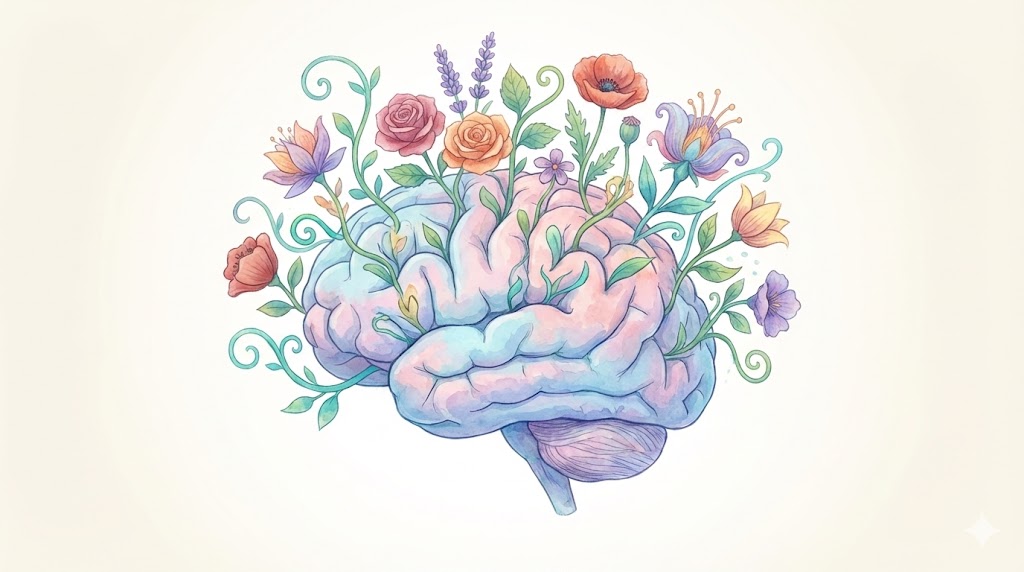
You Are the Author—Pick Up the Pen
Your life is not a fixed sentence. It's a living document. Every day, you have the power to notice the story you're telling, question its evidence, and rewrite it into something more generative. This isn't about denying reality—it's about expanding your range of interpretation so you can respond with wisdom, courage, and curiosity.
Start today. Pick one painful moment and run it through the 4 questions. Share your reframed story with a trusted friend. Watch how your emotions and actions shift when the narrative shifts.
Remember: AI can generate information, but only you can generate meaning. Become the author, not the prisoner.
Call to Action: What's one story you're ready to rewrite? Write it in the comments below—and inspire someone else to pick up their pen.
Reference / Source
- Schaffner, A. K. (2026, July 28). Why Story Intelligence Is a New Core Capability. Psychology Today.